 English
 Italiano
 Latina

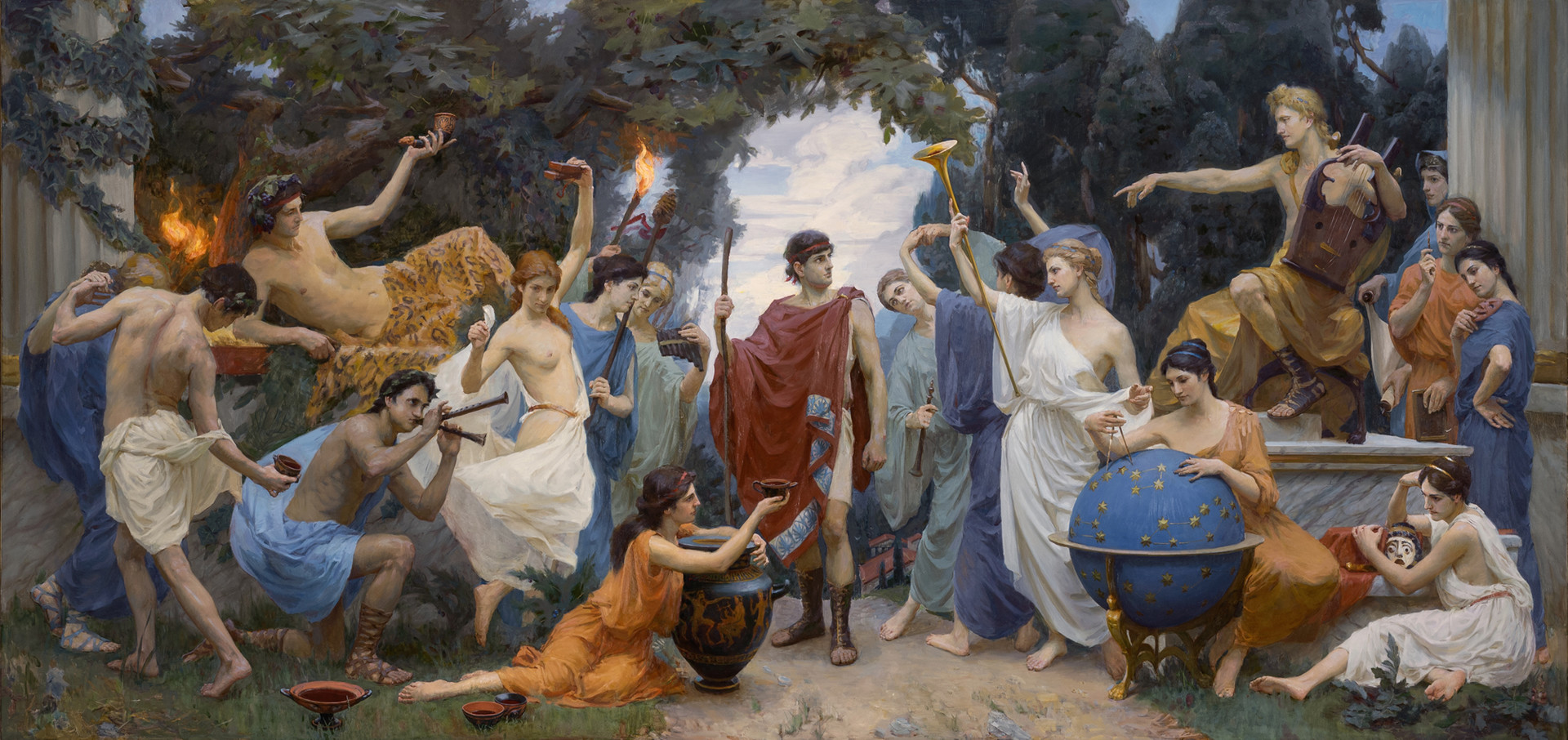
For an art and architecture expressing the universal logos
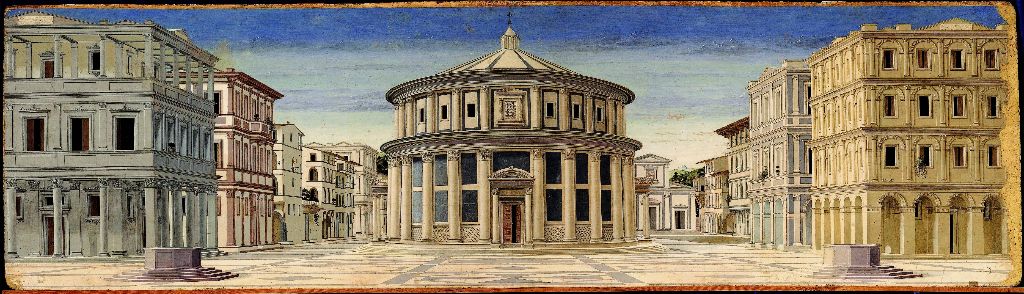
 The figurative arts and architecture have increasingly drifted away from common sense, losing their connection with people, and forgetting a grammar and language that used to be comprehensible and founded on the logos which is universally present in every human being.
The provocations of the avant-garde, once aimed at countering conformity, have turned today into new conformities themselves; the shameless alliance of gallery owners, critics, and “artists” has produced the monster known as financial art. Even in institutions dedicated to artistic education, there is a preference for fostering sterile spontaneity rather than forming young people in the necessary akribia, diligence, and the rigorous acquisition of an expression that has its own laws, just like any human language. In fact, it is also necessary to nourish the souls of those mastering such laws with great and sublime ideas.
We need to resume the language of centuries-old art, to rediscover harmony, proportion, and balance, if we want to revive the human spirit that is currently suffocating in a moment of profound crisis.
Art cannot be reborn from an abstract and barren rationality made of geometric, optical, psychedelic, or hypnotic tricks, devoid of any connection to the common experience of life and the perception of the nature that surrounds us. Nor can art be associated with an obsessive, meticulous, and almost photographic imitation of material reality, or, worse, from a morbid fascination with the more primigenial and monstruous aspects of the “human beast”. It needs a hieròs gàmos, a sacred union between spirit and matter, between rationality and experience: it must draw from that crucial point which lies at the intersection of the vertical force tending toward the hyperuranion and the horizontal one flowing on earth.
No humanism can turn into a renaissance without the visual arts, for they reach the heart through the immediate channel of sight and facilitate access even to the most elevated contents of philosophical speculation and literary creation. As already suggested by Plato, through an appropriate education, the rules of artistic harmony and balance, if adequately absorbed, can be transformed into principles of justice in the ethical field, and truth in the gnoseological one.
The Poikìlē centre for the rebirth of the arts
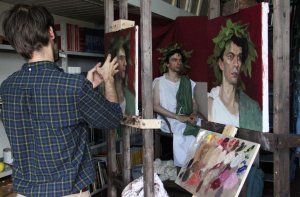 The Accademia Vivarium novum, within the scope of the vast program of its World campus for the humanities, has launched the Poikìlē project for the rebirth of the visual arts and architecture. Under the guidance of expert masters, students learn with attention and care the techniques handed down across the centuries, while also being introduced to classical literature and languages, philosophy, art history, music, and other expressions of the human spirit produced by various civilizations. This circularity of arts and knowledge is fostered by the structure of the campus, where students of humanistic disciplines live alongside their teachers. The campus, with its characteristic internationality, also allows for comparative approaches to different cultures, thus eliciting an enormous mutual enrichment.
The Manifesto-project of the “Sala Europa” at Villa Falconieri
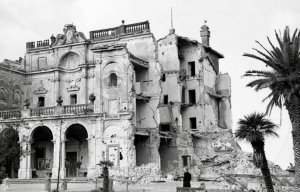
The ideals and theoretical principles of the Poikìlē project are also presented through a “visual manifesto” in a wing of Villa Falconieri in Frascati (Rome), currently the seat of the Accademia Vivarium novum. With the disastrous bombing of September 8, 1943, this section of the villa had been razed to the ground and then hastily rebuilt in 1956-1959, adopting highly questionable choices and inadequate interventions.
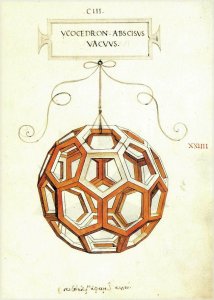
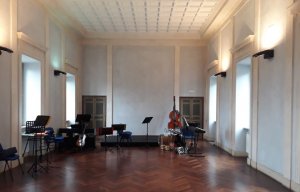
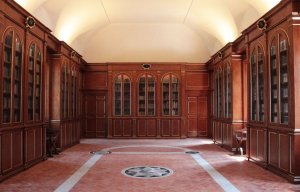
The so-called “Sala Europa” has therefore been refurbished, recently acquiring a new floor in natural terracotta tiles, with marble insertions illustrating the five Platonic solids of the Timaeus, to indicate how the entire cosmos was structured in numero, mensura et pondere (number, measure, and weight). The former ceiling of pre-stamped coffered plaster has been covered by a cove vault in plasterboard, with lateral niches. The vault will be decorated with oil-painted canvases depicting the Platonic myth of the chariots of the souls ascending toward the world of ideas of the hyperuranion, while the niches will hold pairs of wise men (Plato and Cicero, Homer and Virgil, Bessarion and Erasmus, among others). Hercules will be depicted on one of the shorter sides, as he conquers his feritas (wildness) and nourishes his humanitas with the help of poetry and philosophy. The representatives of great civilizations (Mencius, Ashoka, Pico, Rumi) will appear on the opposite end, engaged in conversation, to symbolize universal peace.
Direction and advisory board
The project is directed by Leonid Ilyukhin.
Advisory board:
- Christopher Allen (Library Council of New South Wales, Australia)
- Louise Bourdua (Warwick University)
- Guido Cappelli (Università di Napoli “L'orientale”)
- Claudia Cieri Via (Università di Roma “La Sapienza”)
- Massimo De Vico Fallani (Università di Roma “La Sapienza”)
- Cesare De Seta (Università di Napoli “Federico II”)
- Francesco Furlan (CNRS - Parigi)
- James Hankins (Harvard University)
- Antonella Greco (Università di Roma “La Sapienza”)
- Giuseppe Morganti (Soprintendenza arheologica di Roma e presidente FAI Lazio)
- Olimpia Niglio (Università di Pavia)
- † Paolo Portoghesi (Università di Roma “La Sapienza” e Accademia nazionale dei Lincei)
- Salvatore Settis (Scuola Normale Superiore di Pisa e Accademia nazionale dei Lincei)
- Stéphane Toussaint (CNRS, Parigi)